In the Netherlands, more and more households produce their own electricity with solar panels. This is a positive development, as more solar power means fewer fossil fuels. And that’s exactly what we want. However, this transition also brings challenges, and households with solar panels may have to pay for feeding electricity back into the grid.
Feed-in costs are charges that an energy supplier applies when you feed electricity back into the grid. On this page, we explain what feed-in costs are, why they exist, and how Vrijopnaam deals with them. This way, you know exactly where you stand.
What are feed-in costs?
Feed-in costs are charges you pay when you feed electricity back into the electricity grid. This concerns the electricity you generate with solar panels that you do not use directly yourself. As the grid becomes increasingly congested, processing this returned electricity leads to additional costs for energy suppliers.
These costs were introduced to cover imbalance and profile costs caused by the variable and hard-to-predict nature of solar energy production. In the past, these costs were spread across all customers and included in electricity prices. Today, more and more suppliers choose to charge these costs directly to solar panel owners.
When do you pay feed-in costs?
You pay feed-in costs if:
- you have solar panels
- you feed electricity back into the grid
- your energy supplier charges costs for this
If you do not feed electricity back into the grid, you do not pay feed-in costs.
Please note: if you produce solar power with Panelenopnaam (in a Vrijopnaam solar park), you do not pay feed-in costs.
Why do energy suppliers charge feed-in costs?
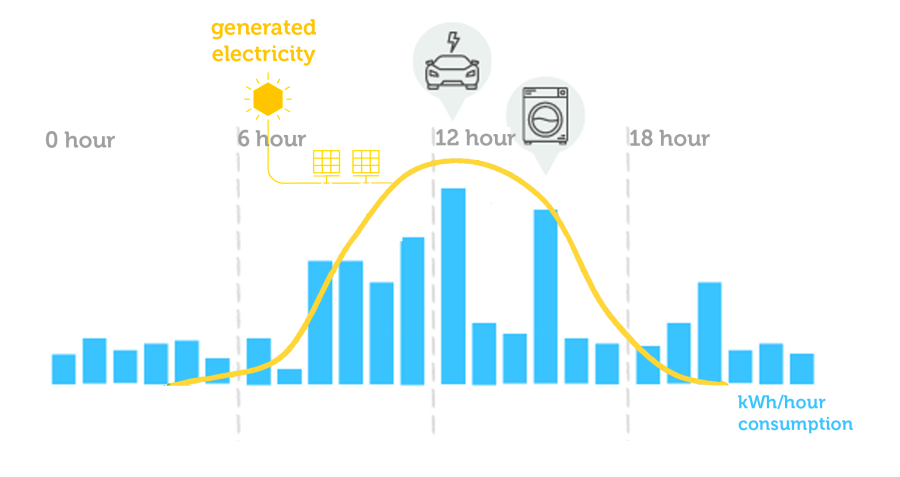
The increase in solar energy means that on sunny days, the supply of electricity can exceed consumption, leading to a surplus on the grid. This makes it more difficult for energy suppliers to balance supply and demand, resulting in additional costs.
To distribute these costs more fairly, suppliers charge feed-in costs to customers who return electricity to the grid. This means that only households with solar panels need to account for paying for feeding electricity back into the grid.
Why do feed-in costs exist?
The growth of solar energy means that on sunny days, electricity supply can exceed demand, creating a surplus on the grid. This makes it more difficult for energy suppliers to keep supply and demand in balance, resulting in additional costs.
To distribute these costs more fairly, suppliers charge feed-in costs to customers who return electricity to the grid. This means that only households with solar panels need to take feed-in costs into account.
How does Vrijopnaam handle feed-in costs?
We do not believe it is fair to spread these rapidly increasing costs across all our customers — including households without solar panels. That is why Vrijopnaam charges feed-in costs to customers who feed electricity back into the grid using solar panels on their own roof. As a result, electricity prices for all Vrijopnaam customers have decreased.
The feed-in costs per kilowatt hour (kWh) can be found on the tariff sheet (available to customers in the Vrijopnaam app).
Households that do not feed electricity back into the grid logically do not pay feed-in costs either. Feed-in costs do not apply to Panelenopnaam.
How can you avoid feed-in costs?
You can avoid feed-in costs by:
- using as much of your self-generated electricity as possible
- not feeding electricity back into the grid
- choosing a solution where net metering and feed-in do not play a role
With Panelenopnaam, you generate electricity without the disadvantages of feeding power back into the grid.
What is a feed-in compenstation?
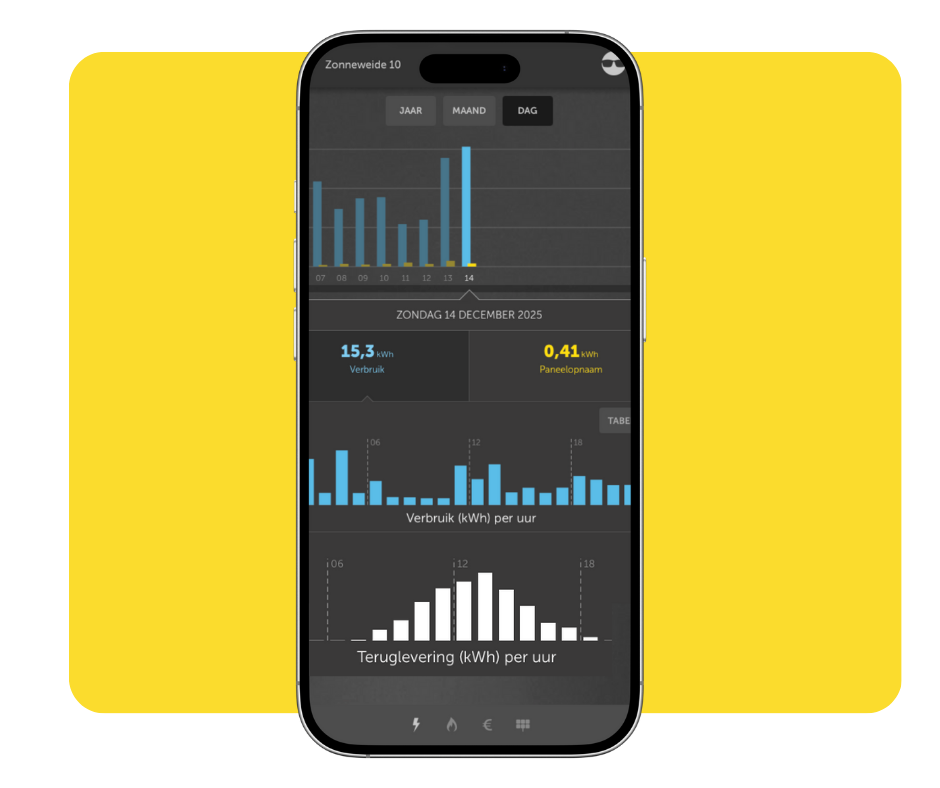
Most people with rooftop solar panels use the electricity they generate themselves. In some cases, however, you may feed more electricity back into the grid than you consume. For this surplus electricity, you receive a feed-in compensation.
You can find the amount of the feed-in compensation per kWh each month on your tariff sheet in the Vrijopnaam (web) app.
Feed-in compensation vs. feed-in costs
Many people confuse these two terms:
- Feed-in compensation: the amount you receive for electricity you feed back into the grid
- Feed-in costs: the charges suppliers apply for feeding electricity back into the grid
You can find both the feed-in compensation and the feed-in costs on the tariff sheet in the Vrijopnaam app.
Will my solar panels still be worthwhile?
The advantage of rooftop solar panels may decrease somewhat due to feed-in costs. However, solar panels remain a smart choice. Even with the end of the net metering scheme from 2027, self-generated electricity continues to be valuable.
Electricity you use directly does not need to be purchased from the grid, which means you pay less for electricity and energy tax. The more of your own generation you use immediately, the greater the benefit.
Solar panels also have a long lifespan, often 25 years or more. This means you can continue to benefit from self-generated electricity for many years. By using energy wisely, you gain advantages in both the short and long term — while also contributing to a more sustainable energy system.
Whant to know more?
Check out the frequently asked questions about feed-in costs below. If your question is not listed, feel free to contact us. Our customer team is available on working days between 9:00 and 17:00 via 085 - 30 32 652 or klantteam@vrijopnaam.nl.
Want to avoid the hassle of feed-in costs or net metering?
Take a look at the possibilities of producing electricity through a Vrijopnaam solar park.
Slimme vragen over de terugleveringskosten
Read all questionsFirst, you can save on many costs by producing your own energy. The rates for your remaining usage can be compared best after separating the commodity tariffs from all governmental taxes/levies and grid operator costs (these do not differ among energy suppliers). Your actual and historical commodity rates are visible in the Vrijopnaam app. Just select 'contract en tarieven' (contract details & rates) from the menu in the right upper corner.
Yes, we do. When you produce more solar power on your home address than you consume, Vrijopnaam pays you a compensation fee per kWh overproduction. For the Energy Tax and net metering always applies over the period of a full year.
You can find your commodity rates and the feed-in compensation fee in the Vrijopnaam app.
Fixed delivery costs apply from January 1, 2024, for Vrijopnaam customers who feed electricity back into the grid with a small consumer connection.
Customers who do not feed electricity back through a small consumer connection do not pay fixed delivery costs. Fixed delivery costs do not apply to Paneelopnaam.
The advantage of rooftop solar panels may decrease somewhat due to feed-in costs. However, solar panels remain a smart choice. Even with theend of the net metering scheme from 2027, self-generated electricity continues to be valuable.
Electricity you use directly does not need to be purchased from the grid, which means you pay less for electricity and energy tax. The more of your own generation you use immediately, the greater the benefit.
Solar panels also have a long lifespan, often 25 years or more. This means you can continue to benefit from self-generated electricity for many years. By using energy wisely, you gain advantages in both the short and long term — while also contributing to a more sustainable energy system.
Feed-in costs are charges you pay when you feed electricity back into the electricity grid. This concerns the electricity you generate with solar panels that you do not use directly yourself. As the grid becomes increasingly congested, processing this returned electricity leads to additional costs for energy suppliers.
The feed-in costs per kilowatt hour (kWh) can be found on the tariff sheet (available to customers in the Vrijopnaam app).
Households that do not feed electricity back into the grid logically do not pay feed-in costs either. Feed-in costs do not apply to Panelenopnaam.
When you feed electricity back into the electricity grid, it's called: feed-in. This concerns the electricity you generate with solar panels that you do not use directly yourself.
Bellen naar 085-30 32 652 kan op werkdagen tussen 9.00 en 17.00 uur. Mailen kan altijd!